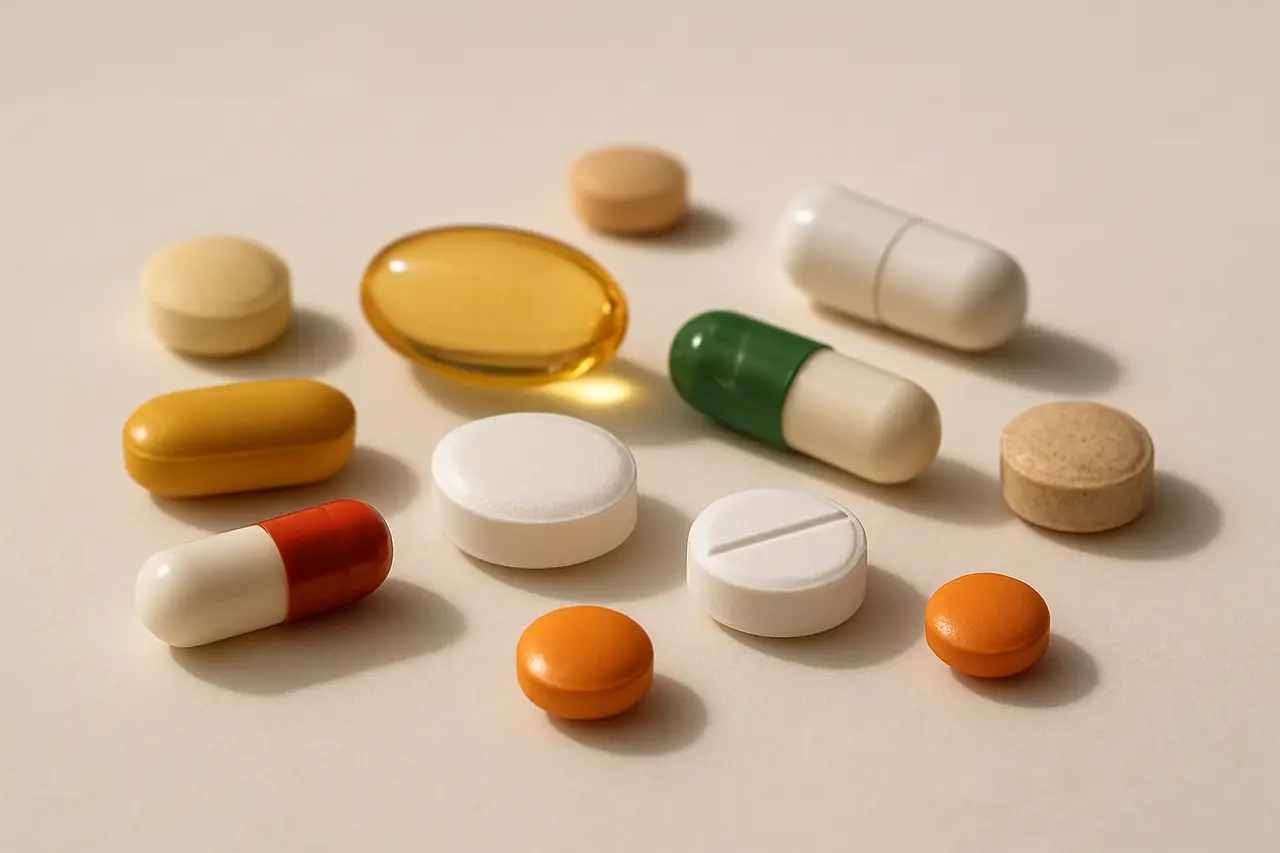
The short answer: Most common pills weigh between 0.1 and 1 gram (100 to 1,000 milligrams). The exact weight depends on the active ingredients and fillers used.
Pill weight by type
Pill weight covers the whole tablet or capsule, not just the active drug. It varies with the medication and its form.
| Type (example) | Typical weight |
|---|---|
| Small tablet (e.g. low-dose aspirin) | 0.1-0.3 g (100-300 mg) |
| Standard tablet | 0.3-0.5 g (300-500 mg) |
| Large coated tablet | 0.5-1 g (500-1,000 mg) |
| Gel capsule | 0.3-0.8 g (300-800 mg) |
| Large supplement tablet | 1-1.5 g (1,000-1,500 mg) |
What affects pill weight
- Active ingredient dose. Higher doses generally mean larger, heavier pills.
- Fillers and binders. Inactive ingredients make up much of a pill's weight.
- Form. Tablets, capsules and softgels differ in weight.
- Coating. Sugar or film coatings add a small amount of weight.
- Pill size. Larger tablets weigh more.
- Supplement type. Vitamins and minerals can be heavier than small drugs.
How pill weight compares
A typical 0.5 gram pill weighs about a tenth of a US nickel, or roughly the same as a single grain of rice or two.
Frequently asked questions
How much does an aspirin tablet weigh?
A standard aspirin tablet weighs roughly 0.3 to 0.5 grams, though the active drug is only part of that.
Why do pills weigh more than the drug dose?
Pills include fillers, binders and coatings that hold the tablet together and aid swallowing, adding to the total weight.
How much does a vitamin pill weigh?
A large supplement tablet can weigh around 1 to 1.5 grams, depending on the dose and form.