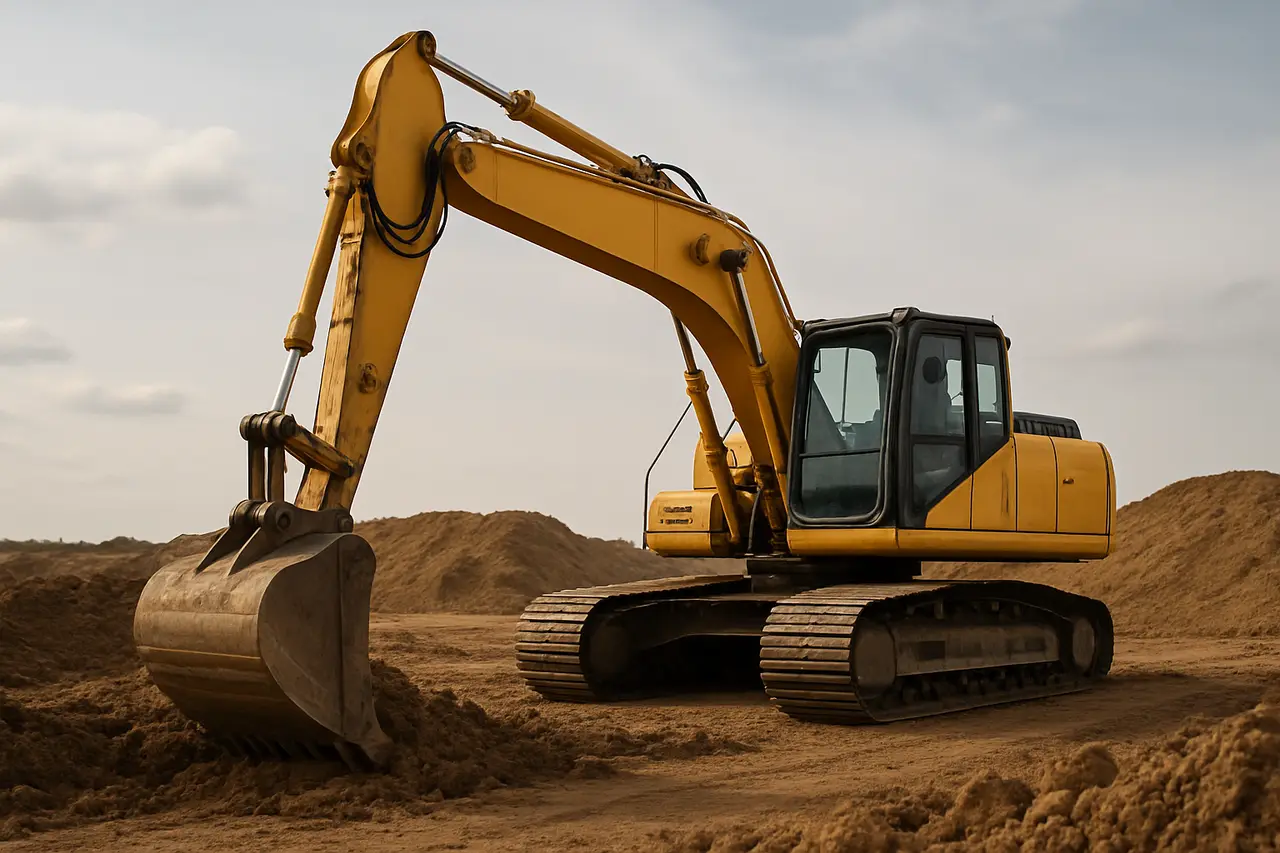
The short answer: Excavators typically weigh between 7 and 90 metric tons (about 15,400 to 198,000 lbs), depending on size and purpose. Compact models start near 7 tons, while large mining excavators can exceed 90 tons.
Excavator weight by type
Excavators are heavy digging machines, and weight is classed by operating mass. The range is enormous between compact and mining models.
| Type (example) | Typical weight |
|---|---|
| Mini excavator | 1-7 t (2,200-15,400 lbs) |
| Midi excavator | 7-12 t (15,400-26,500 lbs) |
| Standard crawler excavator | 12-45 t (26,500-99,000 lbs) |
| Large excavator | 45-90 t (99,000-198,000 lbs) |
| Mining excavator | 90-800+ t (198,000-1,760,000+ lbs) |
What affects excavator weight
- Size class. Operating weight is the main way excavators are categorized.
- Boom and arm. Longer reach and bigger buckets add weight.
- Counterweight. A heavy rear counterweight balances the machine and adds mass.
- Undercarriage. Tracks or wheels and the frame contribute substantial weight.
- Attachments. Hammers, grapples and large buckets add to the total.
- Application. Mining excavators are far heavier than construction models.
How excavator weight compares
A 20-ton standard excavator weighs about as much as 13 average cars, while the largest mining excavators rival the weight of a fully loaded freight train locomotive.
Frequently asked questions
How much does a mini excavator weigh?
A mini excavator typically weighs around 1 to 7 metric tons (about 2,200 to 15,400 lbs).
What is operating weight on an excavator?
Operating weight is the machine's total working mass including fluids, an operator and standard equipment, used to class its size.
How heavy is the biggest excavator?
The largest mining excavators can exceed 800 metric tons, making them among the heaviest land machines ever built.