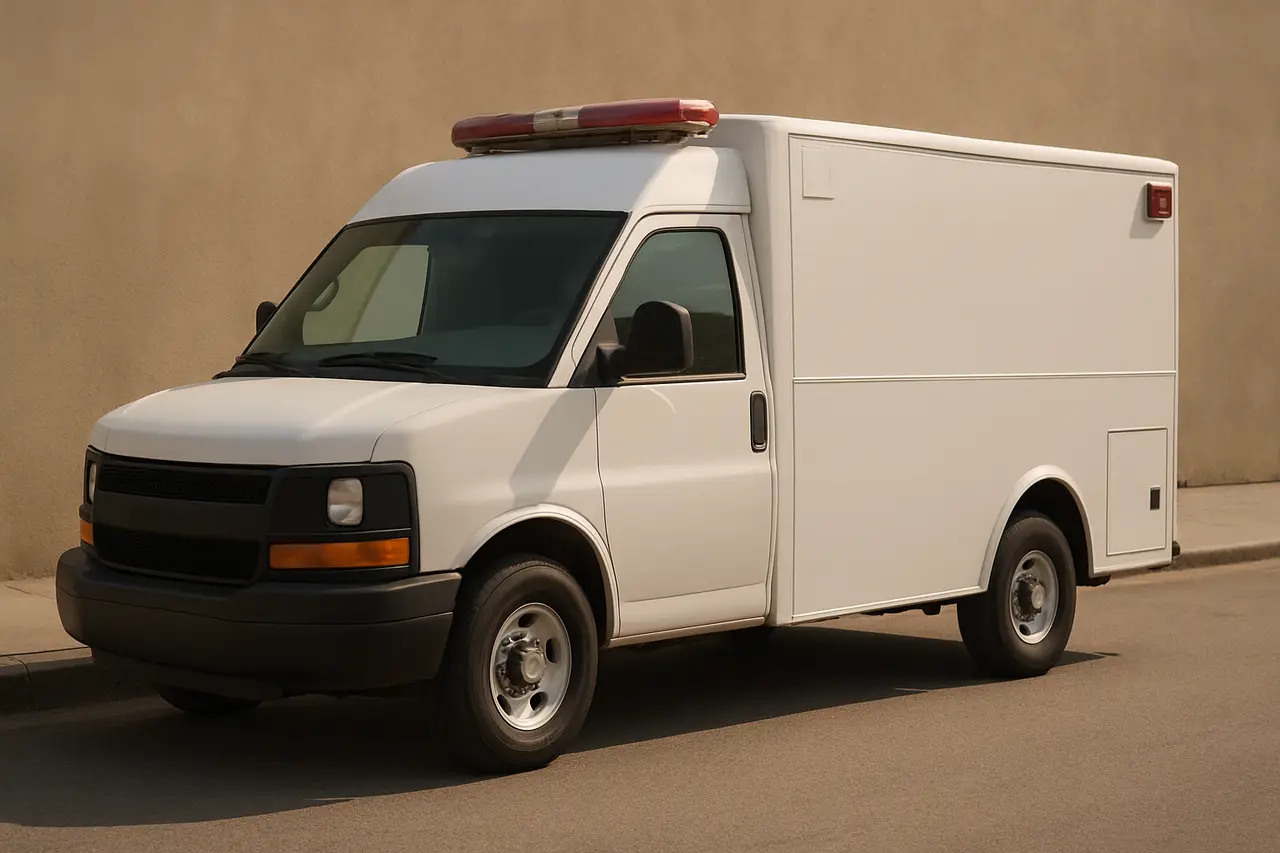
The short answer: A typical ambulance weighs between 6,000 and 9,000 pounds (about 2,700 to 4,100 kg), depending on its size, equipment and configuration. Heavy-duty box ambulances sit at the higher end.
Ambulance weight by type
Ambulances are vans or trucks fitted out with medical equipment, which adds considerable weight over a standard vehicle. Figures below are typical curb weights.
| Type (example) | Typical weight |
|---|---|
| Type II (van-based) | 2,700-3,600 kg (6,000-8,000 lbs) |
| Type I (truck chassis, box) | 4,500-6,400 kg (10,000-14,000 lbs) |
| Type III (van chassis, box) | 4,100-5,400 kg (9,000-12,000 lbs) |
| Loaded Type I/III ambulance | up to 6,400 kg (14,000 lbs) |
| Mini / first-response ambulance | 2,300-3,000 kg (5,000-6,600 lbs) |
What affects ambulance weight
- Ambulance type. Box-style Type I and III units are heavier than van-based Type II.
- Medical equipment. Stretchers, monitors and supplies add significant weight.
- Chassis. Truck-based chassis are heavier than van chassis.
- Storage cabinets. Built-in cabinetry and oxygen systems add mass.
- Crew and patient. Personnel and a patient add several hundred kilograms in use.
- Power equipment. Generators and auxiliary batteries add weight.
How ambulance weight compares
An ambulance at around 4,000 kg weighs roughly the same as two and a half average cars, or about a small adult rhinoceros.
Frequently asked questions
Why are ambulances so heavy?
Beyond the base vehicle, ambulances carry a box body, cabinetry, oxygen systems and heavy medical equipment that add thousands of pounds.
What is a Type I ambulance?
A Type I ambulance uses a heavy truck chassis with a separate box patient compartment, and is among the heaviest types.
How much does a loaded ambulance weigh?
A fully equipped and crewed ambulance can weigh up to around 14,000 pounds (about 6,400 kg) for the largest types.