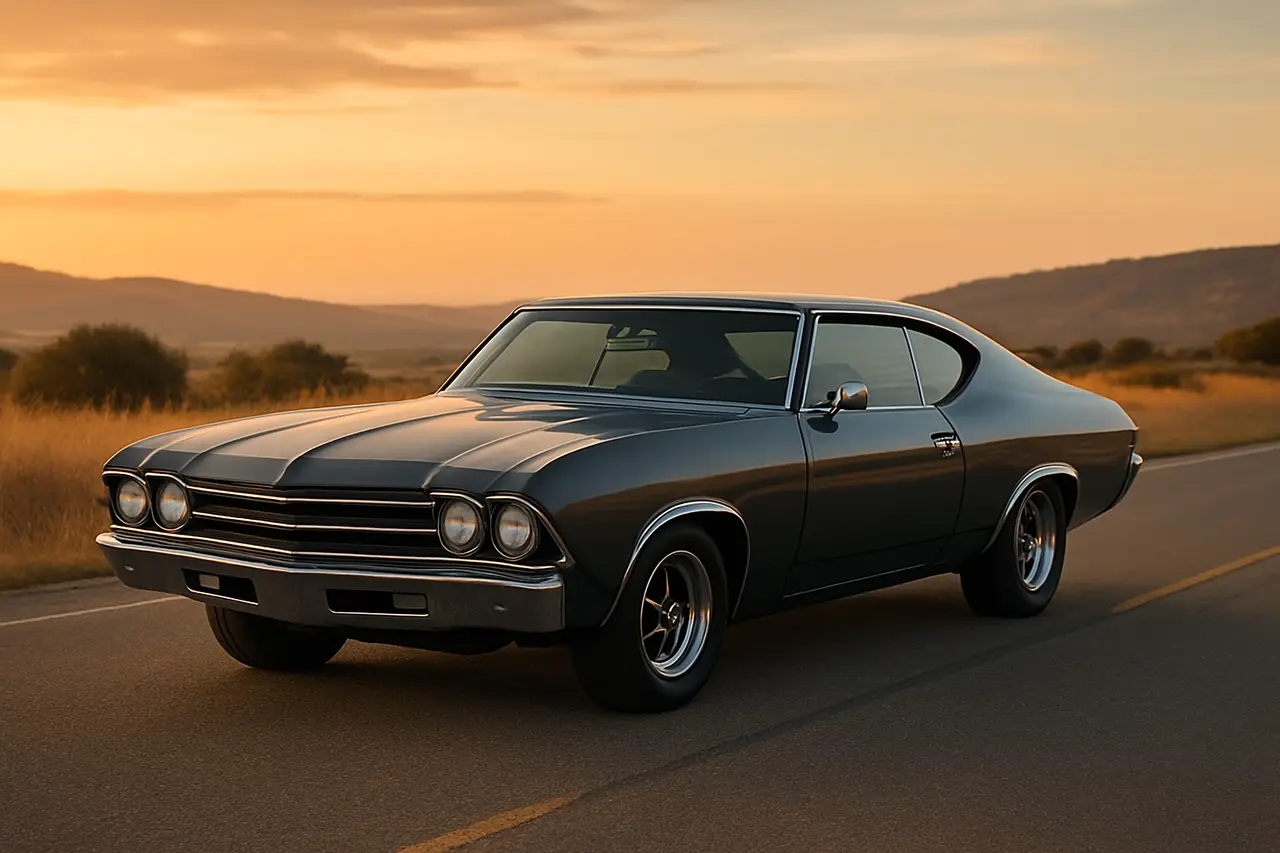
The short answer: A typical muscle car weighs between 3,500 and 4,200 pounds (about 1,590 to 1,905 kg), depending on the model and year. Their heavy V8 engines and robust bodies make them heavier than most sports cars.
Muscle car weight by type
Muscle cars are American two-door performance cars built around big V8 engines. Weights vary between classic 1960s-70s models and modern revivals.
| Type (example) | Typical weight |
|---|---|
| Classic 1960s muscle car | 1,500-1,700 kg (3,300-3,750 lbs) |
| Classic 1970s muscle car | 1,650-1,900 kg (3,650-4,200 lbs) |
| Modern Ford Mustang GT | around 1,700 kg (3,750 lbs) |
| Modern Dodge Challenger | 1,900-2,000 kg (4,200-4,400 lbs) |
| Modern Chevrolet Camaro SS | around 1,700 kg (3,750 lbs) |
What affects muscle car weight
- Engine. Large-displacement V8 engines are heavy and account for much of a muscle car's mass.
- Model year. Modern muscle cars carry extra safety and tech equipment, often making them heavier than classics.
- Body construction. Steel bodies and solid frames add weight compared with lightweight performance cars.
- Drivetrain. Larger transmissions and rear axles for high torque add to the total.
- Options. Convertibles, sound systems and creature comforts increase curb weight.
- Supercharging. High-output supercharged variants add hardware and cooling weight.
How muscle car weight compares
At around 1,800 kg, a muscle car weighs roughly the same as a mid-size SUV, or about as much as a fully grown male moose.
Frequently asked questions
Why are muscle cars so heavy?
Their large V8 engines, steel bodies and heavy-duty drivetrains add significant weight compared with lighter sports cars built for agility.
How much does a 1969 Dodge Charger weigh?
A 1969 Dodge Charger weighs roughly 1,650 to 1,700 kg (about 3,650 to 3,750 lbs), depending on the engine and options.
Are modern muscle cars heavier than classics?
Often yes, because modern models include airbags, crumple zones and electronics that classic cars lacked.