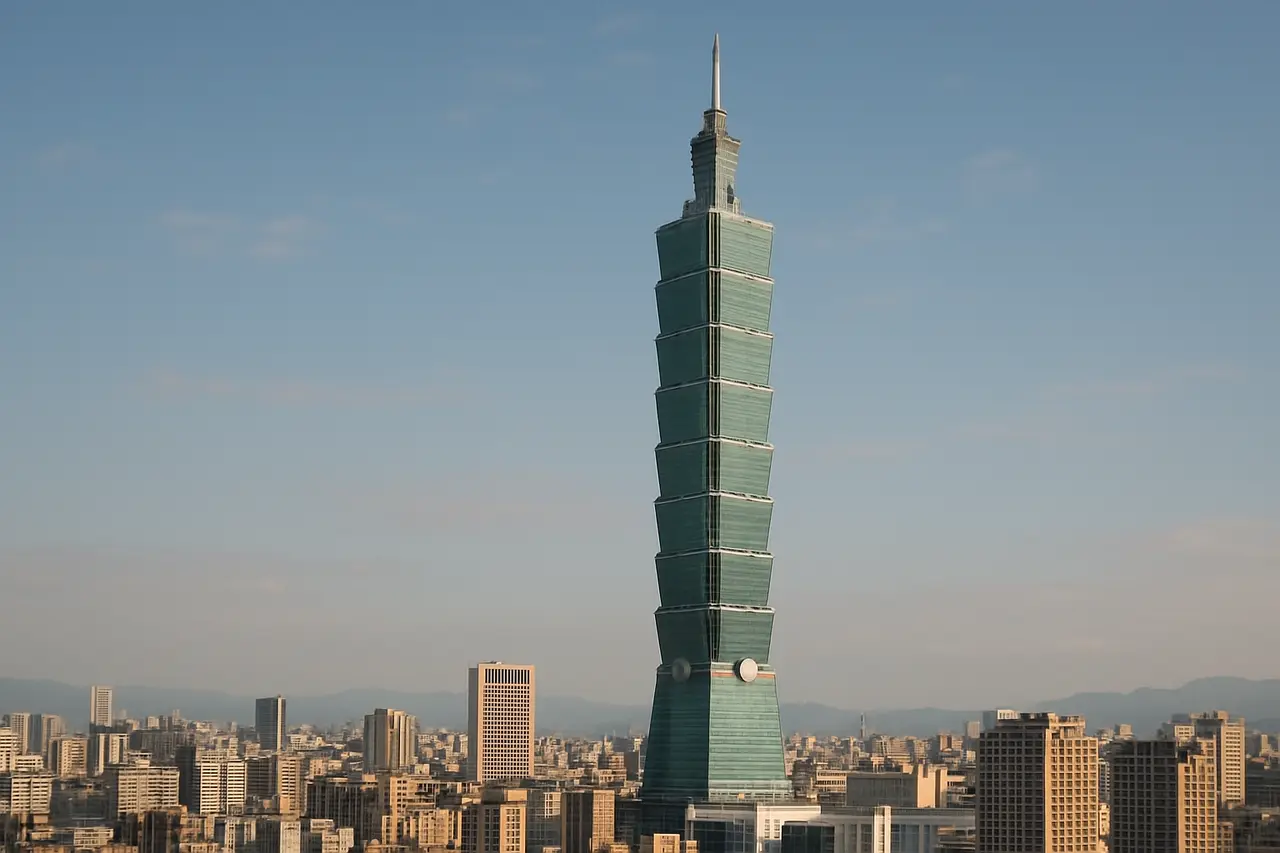
The short answer: Taipei 101 weighs roughly 700,000 metric tons (about 770,000 US tons), built from reinforced concrete, steel, and glass.
Skyscraper weight by type
The 508-meter Taipei tower's weight is dominated by concrete and steel, plus a famous tuned mass damper. The table shows its major parts.
| Component (example) | Typical weight |
|---|---|
| Reinforced concrete and steel frame | The bulk of the total |
| Floor slabs (101 floors) | Many tens of thousands of tons |
| Glass and metal facade | Tens of thousands of tons |
| Tuned mass damper | About 660 metric tons |
What affects skyscraper weight
- Structural frame. A combination of reinforced concrete and steel forms the load-bearing structure and most of the weight.
- Tuned mass damper. A 660-ton steel ball near the top reduces sway during typhoons and earthquakes.
- Height. With 101 floors reaching 508 meters, the building needs heavy material to stay stable.
- Facade. The glass-and-metal curtain wall adds substantial weight across the tower's height.
- Deep foundations. Massive piles anchor the tower in earthquake-prone ground and may be counted in totals.
- Estimate basis. Quoted weights are approximate and vary depending on which elements are included.
How skyscraper weight compares
At about 700,000 metric tons, Taipei 101 weighs roughly as much as seven large aircraft carriers, or over 100,000 African elephants.
Frequently asked questions
How much does Taipei 101 weigh?
It is estimated at about 700,000 metric tons, or roughly 770,000 US tons. The figure comes from its concrete, steel, and glass construction.
How heavy is the Taipei 101 mass damper?
The tuned mass damper is a steel sphere weighing about 660 metric tons. It swings to counteract building sway during storms and earthquakes.
How tall is Taipei 101?
It stands 508 meters tall with 101 floors. It was the tallest building in the world from 2004 to 2010.