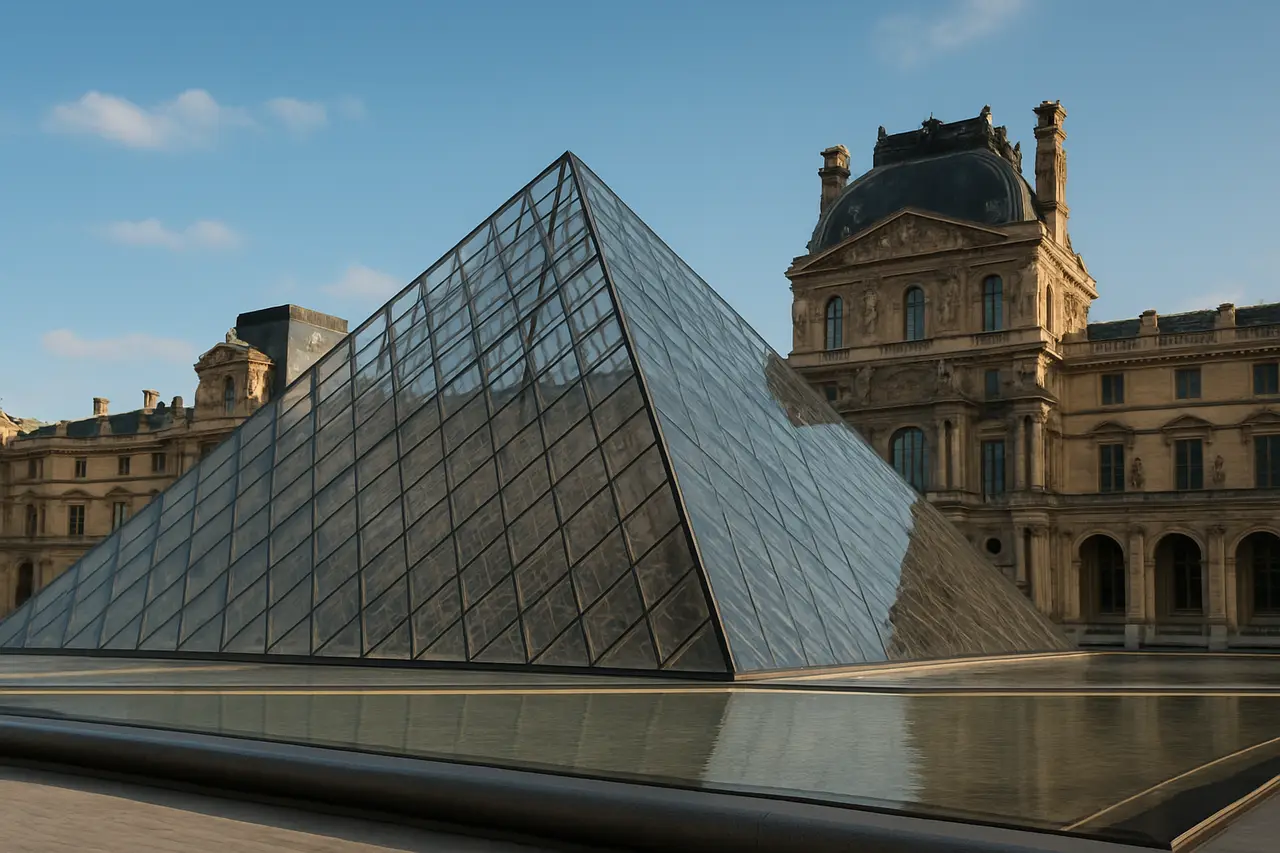
The short answer: The Louvre Pyramid weighs roughly 200 US tons (about 181 metric tonnes), counting its glass panes and metal supporting frame.
Glass pyramid weight by type
The pyramid is a lightweight glass-and-steel structure, so most of its weight comes from the glass panels and the lattice that holds them. The table outlines its main elements.
| Component (example) | Typical weight |
|---|---|
| 673 glass panes | Roughly 95 to 100 tons of glass |
| Steel and aluminum frame | Tens of tons of metal |
| Cable tension network | A few tons |
| Total structure | About 200 US tons |
What affects glass pyramid weight
- Glass panels. The 673 laminated glass panes make up a large share of the total weight despite the airy appearance.
- Metal lattice. The slender steel and aluminum frame is engineered to be light while carrying the glass.
- Size. Standing about 21.6 meters tall, the pyramid's modest footprint keeps its overall mass small for a landmark.
- Tension cables. The cable and strut system reduces the amount of bulky structure needed, lowering weight.
- Estimate basis. Quoted totals are approximate and depend on whether the foundation is included.
- Materials choice. Special clear glass and aluminum were chosen partly for transparency and partly for manageable weight.
How glass pyramid weight compares
At about 200 tons, the pyramid weighs roughly the same as 150 average cars, or a single small commercial airliner.
Frequently asked questions
How much does the Louvre Pyramid weigh?
It weighs about 200 US tons, or roughly 181 metric tonnes. Most of this comes from its 673 glass panes and metal frame.
How many glass panes does the Louvre Pyramid have?
It is made of 673 individual glass panes. These were specially produced for clarity and a uniform appearance.
Who designed the Louvre Pyramid?
It was designed by architect I. M. Pei and completed in 1989. It serves as the main entrance to the Louvre Museum in Paris.