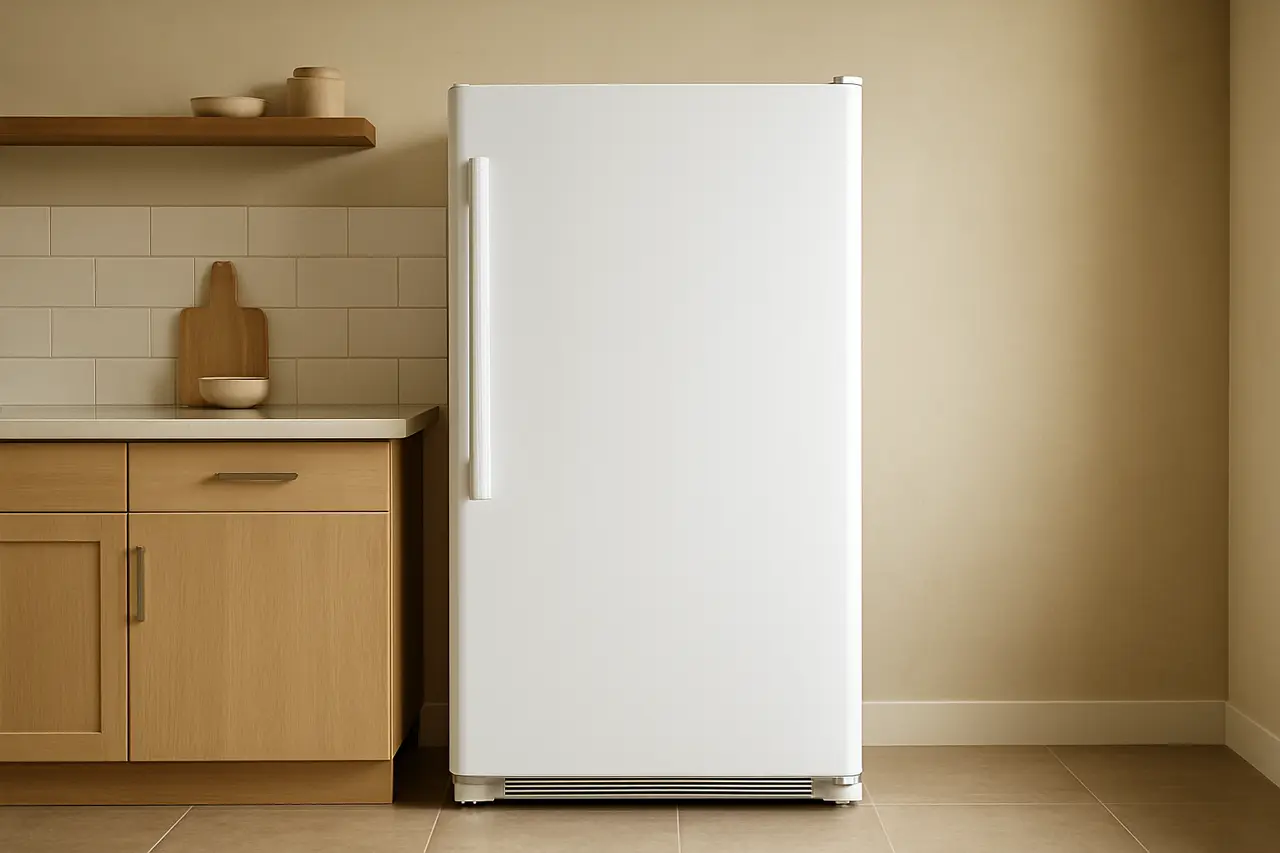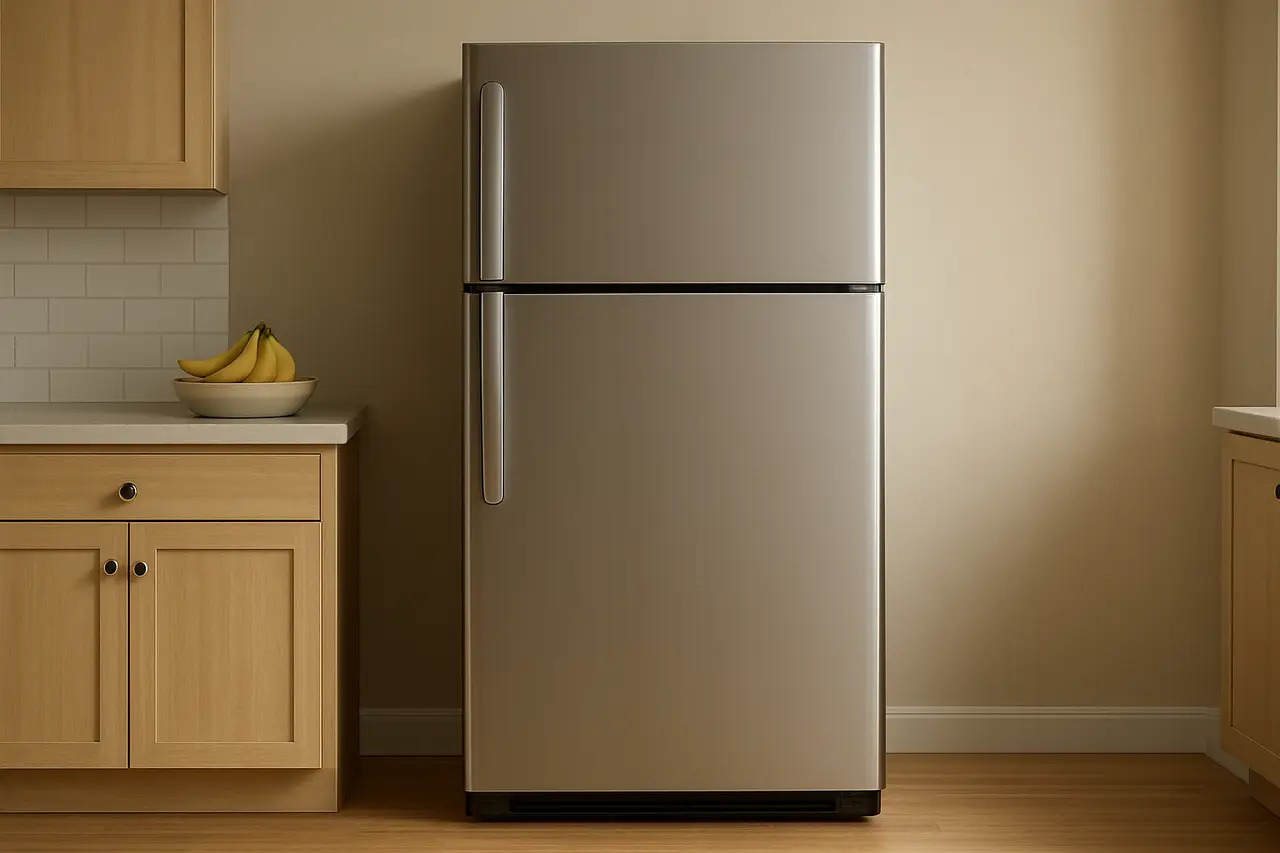
The short answer: Most standard refrigerators weigh between about 90 and 150 kg (200 to 330 lb), though compact models can be far lighter.
Refrigerator weight by type
Refrigerators vary widely by size, type, and features. Weight rises with capacity and with extras like ice makers and water dispensers.
| Type (example) | Typical weight |
|---|---|
| Compact / mini fridge | about 25-45 kg (55-99 lb) |
| Top-freezer refrigerator | about 60-90 kg (132-198 lb) |
| Bottom-freezer refrigerator | about 80-110 kg (176-242 lb) |
| Side-by-side refrigerator | about 100-140 kg (220-309 lb) |
| French-door / large model | about 120-160 kg or more |
What affects refrigerator weight
- Size and capacity. Larger interior volume means more material and weight.
- Configuration. Side-by-side and French-door designs are heavier than top-freezers.
- Ice and water dispensers. Built-in dispensers add components and weight.
- Insulation and shelving. Thicker insulation and glass shelves add mass.
- Materials. Stainless steel exteriors weigh more than painted finishes.
- Brand and build. Premium models tend to be heavier and more solid.
How refrigerator weight compares
A standard refrigerator at around 120 kg weighs roughly the same as two adult women, or a large vending machine when empty.
Frequently asked questions
How much does a refrigerator weigh?
Most standard refrigerators weigh between about 90 and 150 kg. Compact models may be around 25 to 45 kg, while large French-door units can exceed 150 kg.
Which refrigerator type is heaviest?
Side-by-side and French-door models are generally the heaviest because of their larger size and added features like ice and water dispensers.
How many people are needed to move a fridge?
A full-size refrigerator usually needs two people and an appliance dolly to move safely, given its weight of 90 to 150 kg or more.