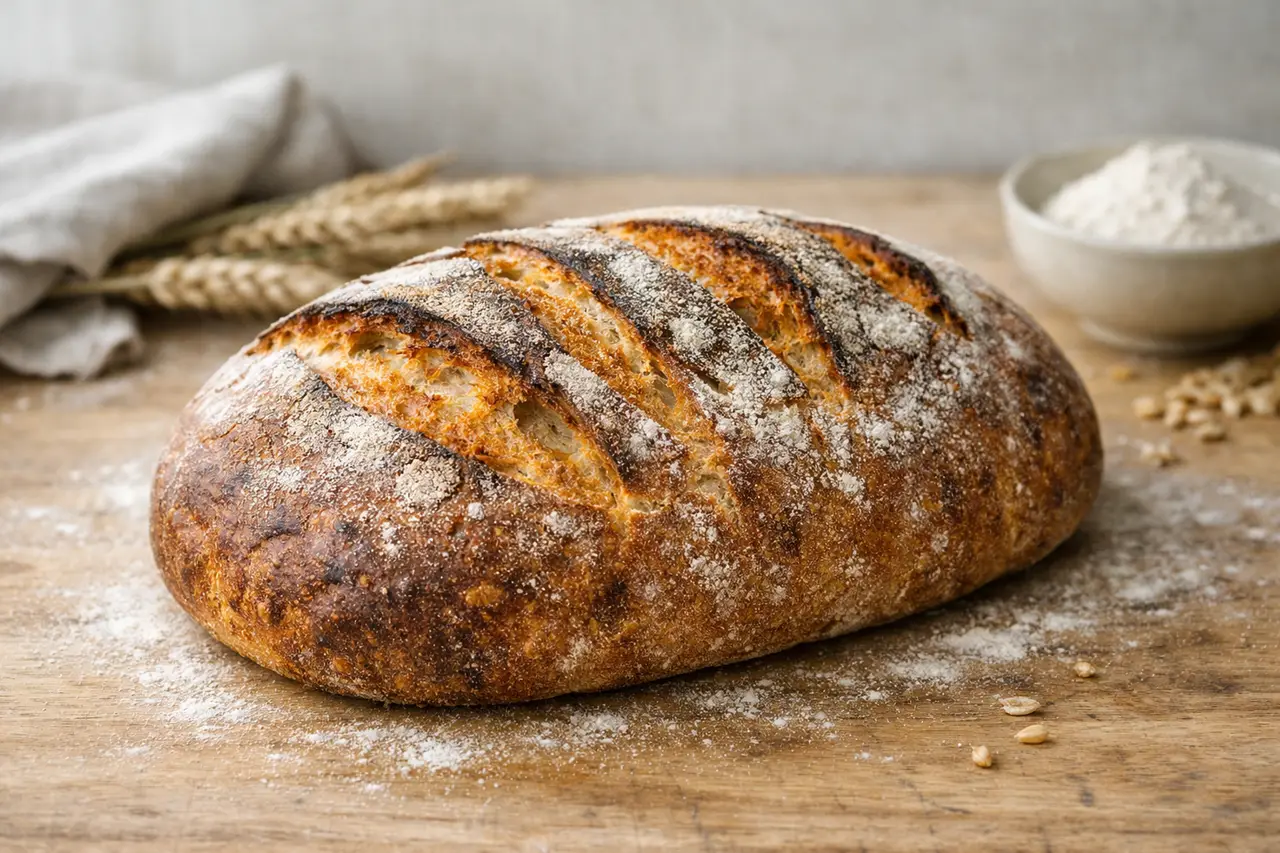
The short answer: A whole loaf of bread typically weighs about 450 to 900 grams (1 to 2 pounds), depending on the type and size.
Loaf of bread weight by type
Loaf weight depends on the bread style, pan size, and crumb density. Here are some common types and their typical weights.
| Type (example) | Typical weight |
|---|---|
| Standard sandwich loaf | about 450-600 g (1-1.3 lb) |
| Artisan boule or batard | about 500-750 g (1.1-1.7 lb) |
| Sourdough loaf | about 700-900 g (1.5-2 lb) |
| Large bakery / rye loaf | about 900-1100 g (2-2.4 lb) |
What affects loaf of bread weight
- Bread style. Dense ryes and sourdoughs weigh more than airy white loaves.
- Pan or shape size. A larger loaf simply uses more dough.
- Crumb density. Tightly packed crumb traps more dough per volume.
- Moisture content. Fresh bread holds more water than stale bread.
- Crust thickness. A thick, baked-on crust adds weight.
- Added ingredients. Seeds, grains, and nuts increase total weight.
How loaf of bread weight compares
A standard sandwich loaf weighs about the same as a pineapple or a one-liter bottle of water (around 500 grams), while a big sourdough is closer to a brick.
Frequently asked questions
How much does a standard loaf of bread weigh?
A typical packaged sandwich loaf weighs about 450 to 600 grams (1 to 1.3 pounds).
Why do sourdough loaves weigh more?
Sourdough has a denser crumb and higher moisture content, so a loaf often weighs 700 to 900 grams or more.
How many slices are in a loaf?
A standard loaf usually yields about 20 to 24 slices, so each slice averages roughly 25 to 35 grams.