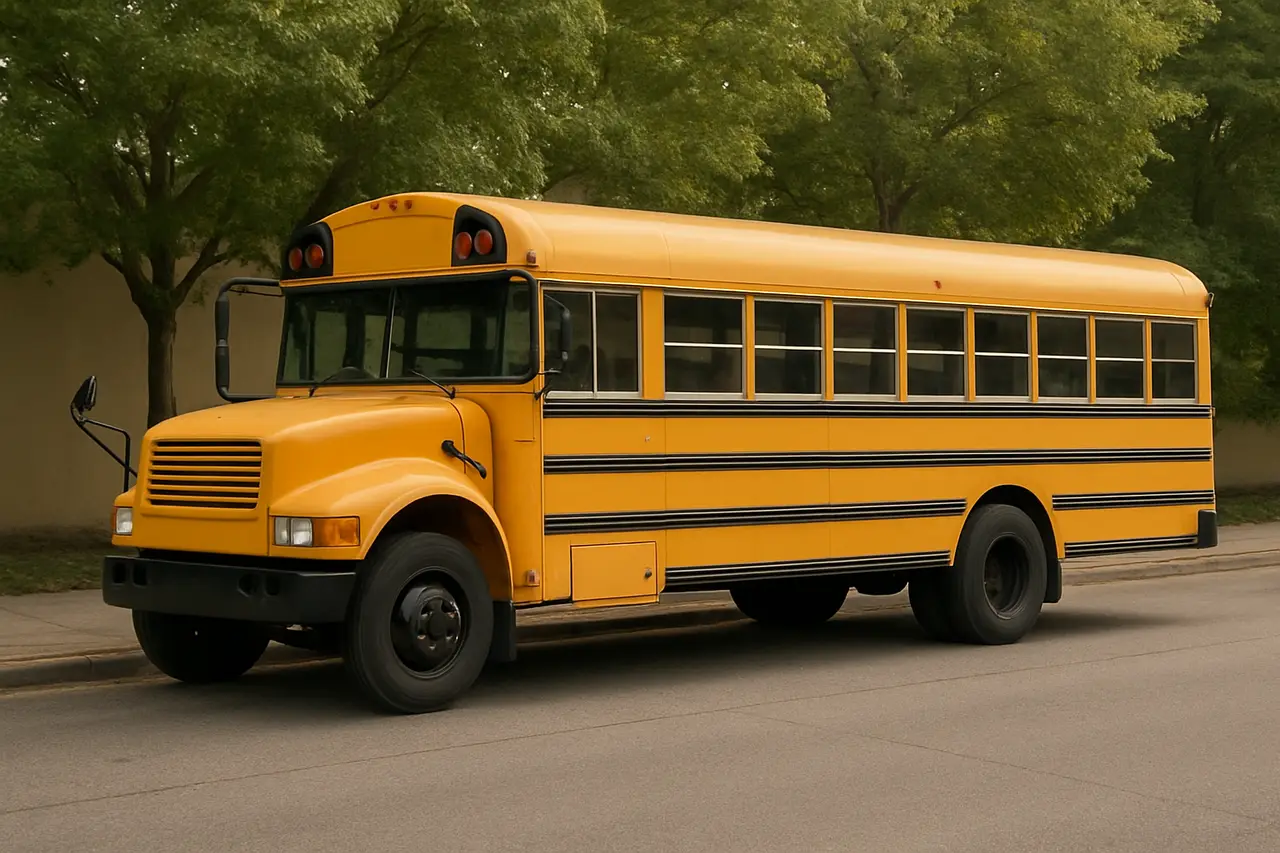
The short answer: A typical empty school bus weighs between 10,000 and 14,000 pounds (about 4,500 to 6,350 kg). Fully loaded with passengers, a large bus can reach up to 36,000 pounds (around 16,330 kg).
School bus weight by type
School buses come in several size classes. The figures below show empty (curb) weight, since loaded weight depends on passenger count.
| Type (example) | Typical empty weight |
|---|---|
| Type A (small/van-based) | 4,500-6,000 kg (10,000-13,000 lbs) |
| Type B (mid-size) | 5,500-7,000 kg (12,000-15,400 lbs) |
| Type C (conventional) | 6,000-8,000 kg (13,000-17,600 lbs) |
| Type D (large transit-style) | 7,000-9,000 kg (15,400-19,800 lbs) |
| Fully loaded large bus | up to 16,330 kg (36,000 lbs) |
What affects school bus weight
- Bus class. Larger Type C and D buses weigh much more than small Type A models.
- Passenger load. A full load of students can add several thousand pounds.
- Body construction. Steel safety cages and reinforced floors add mass.
- Engine and fuel. Diesel engines and large fuel tanks add weight.
- Seating capacity. More seats means a longer, heavier body.
- Accessibility equipment. Wheelchair lifts and ramps add weight.
How school bus weight compares
An empty school bus at around 6,000 kg weighs roughly the same as a full-grown African elephant, or about four average cars.
Frequently asked questions
How much does a full school bus weigh?
A large, fully loaded school bus can weigh up to around 36,000 pounds (about 16,330 kg) including passengers.
What is GVWR for a school bus?
Gross Vehicle Weight Rating for a large school bus is typically around 30,000 to 36,000 pounds, the maximum allowable loaded weight.
How much does a short school bus weigh?
A small Type A school bus typically weighs around 4,500 to 6,000 kg (about 10,000 to 13,000 lbs) empty.