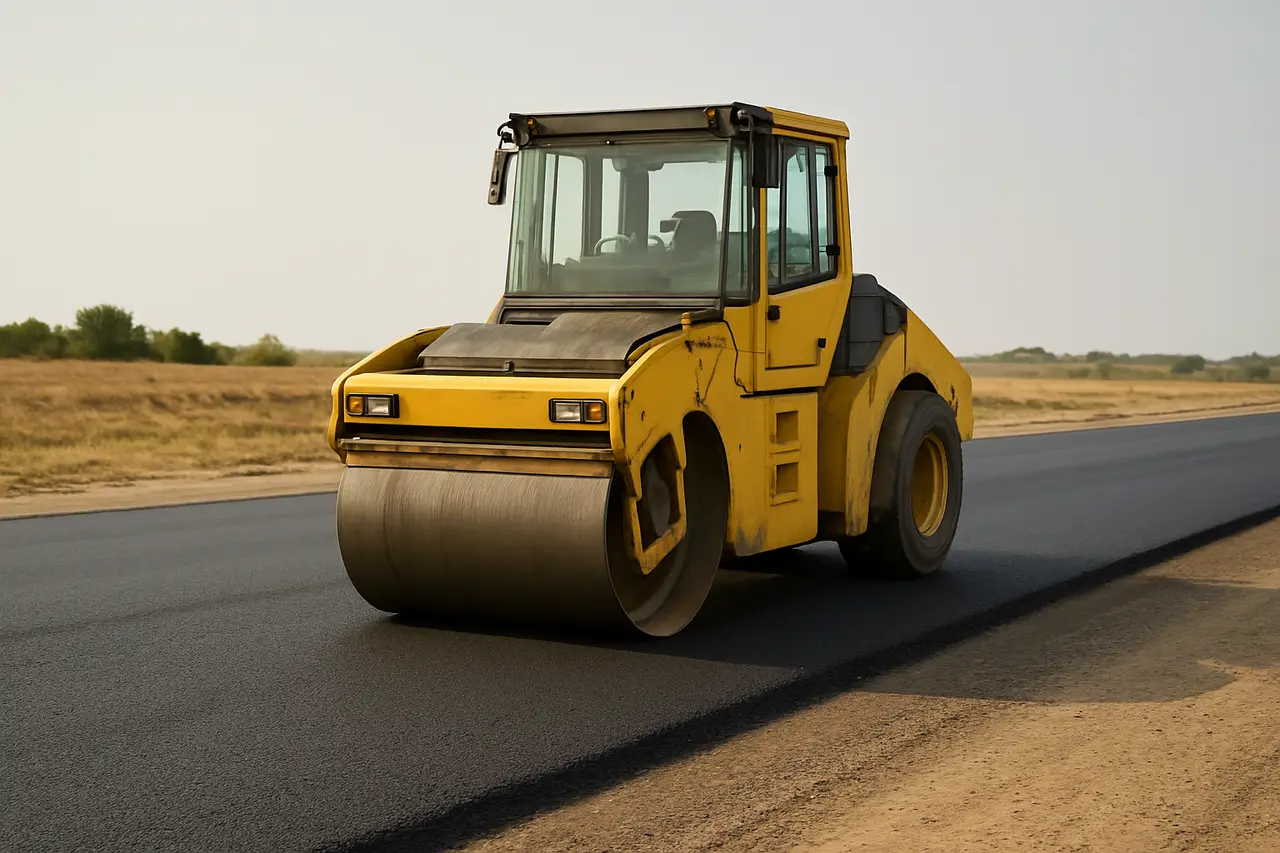
The short answer: A typical road roller weighs between 5,000 and 14,000 kilograms (about 11,000 to 31,000 lbs), with some large models exceeding 20,000 kg (around 44,000 lbs). Their heavy mass is what compacts the ground.
Road roller weight by type
Road rollers compact soil, gravel and asphalt during construction. Weight is their key working tool, so models span a wide range.
| Type (example) | Typical weight |
|---|---|
| Walk-behind roller | 500-1,500 kg (1,100-3,300 lbs) |
| Small ride-on tandem roller | 2,500-5,000 kg (5,500-11,000 lbs) |
| Single-drum soil compactor | 10,000-15,000 kg (22,000-33,000 lbs) |
| Large vibratory roller | 15,000-20,000 kg (33,000-44,000 lbs) |
| Heavy pneumatic roller | 10,000-25,000 kg (22,000-55,000 lbs) |
What affects road roller weight
- Drum size. Larger and wider drums add substantial weight for deeper compaction.
- Roller type. Single-drum, tandem and pneumatic designs each have different weight ranges.
- Ballast. Some rollers add water or sand ballast to increase compaction force.
- Vibration system. Vibratory mechanisms add weight and boost effective force.
- Intended job. Soil compactors are heavier than light asphalt finishing rollers.
- Operating fluids. Fuel, hydraulic oil and water tanks add to the total.
How road roller weight compares
A 14,000 kg road roller weighs about as much as nine average cars, or roughly two adult African elephants.
Frequently asked questions
Why are road rollers so heavy?
Their weight is the main tool for the job, pressing down on soil or asphalt to compact it into a firm, stable surface.
What is a vibratory roller?
A vibratory roller adds a vibrating drum mechanism so its effective compaction force is much greater than its static weight alone.
How much does a small asphalt roller weigh?
A small ride-on tandem asphalt roller typically weighs around 2,500 to 5,000 kg (about 5,500 to 11,000 lbs).