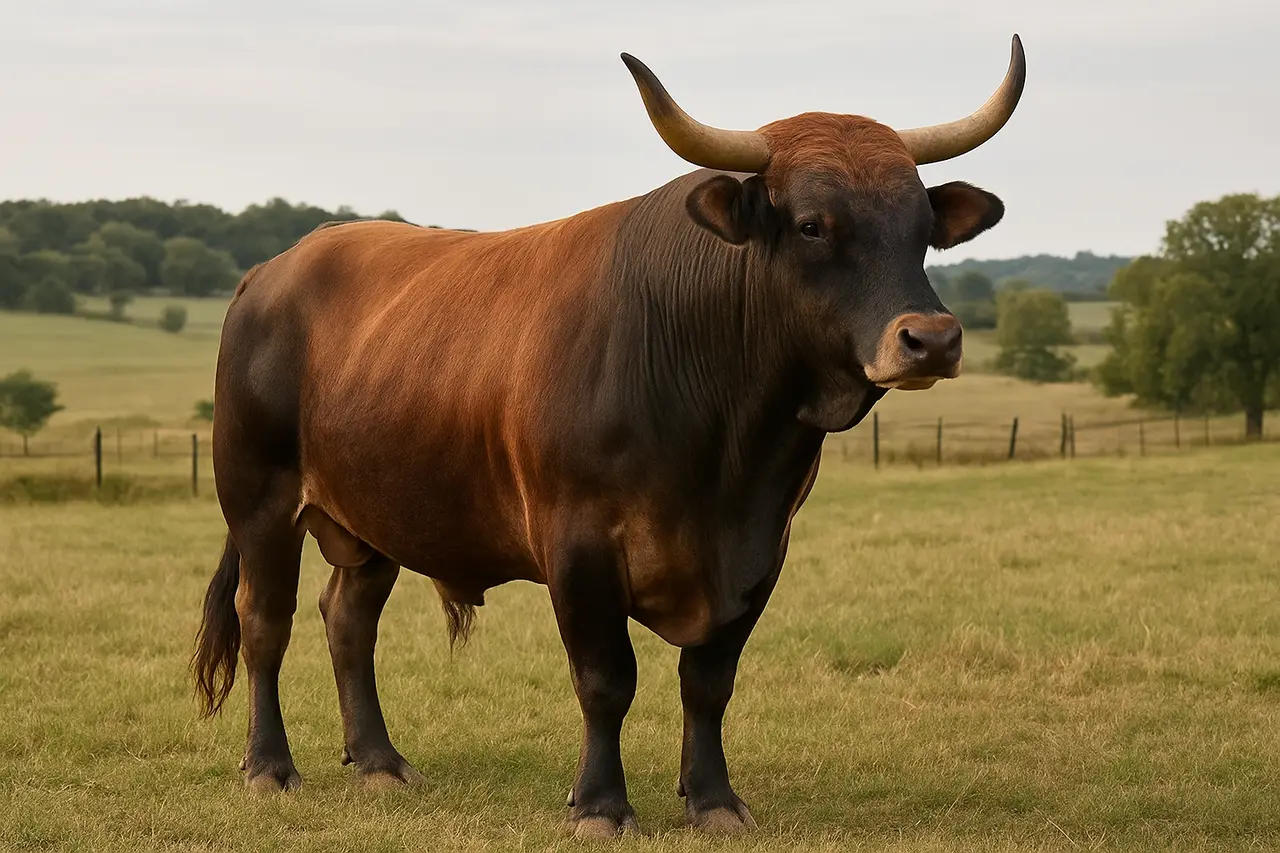
The short answer: An average ox typically weighs about 450 to 900 kg (1,000 to 2,000 lb), depending on breed and condition.
Ox weight by type
An ox is a castrated adult male of cattle trained for work, and its weight varies widely by breed.
| Type (example) | Typical weight |
|---|---|
| Smaller breed ox | 450-600 kg (1,000-1,320 lb) |
| Average working ox | 600-800 kg (1,320-1,760 lb) |
| Large breed ox | 800-900 kg (1,760-2,000 lb) |
| Very large ox | up to about 1,000 kg (2,200 lb) |
| Young steer in training | around 300-450 kg (660-1,000 lb) |
What affects ox weight
- Breed. Heavy draft breeds far outweigh smaller local cattle.
- Age. Oxen keep gaining weight as they mature.
- Diet. Quality and quantity of feed strongly affect mass.
- Work and conditioning. Muscular working oxen carry weight differently than idle cattle.
- Health. Disease or poor nutrition reduces body weight.
- Region. Local cattle types vary in typical adult size.
How ox weight compares
An average ox at around 750 kg weighs roughly as much as a small car, and a large one can outweigh a grand piano several times over.
Frequently asked questions
How much does an ox weigh on average?
Most oxen weigh between 450 and 900 kg (1,000 to 2,000 lb), depending on the breed.
What is the difference between an ox and a cow?
An ox is a castrated adult male of cattle trained for work, so it is often larger and more muscular than a typical cow.
Can an ox weigh more than 1,000 kg?
Yes, large draft breeds can exceed 1,000 kg (2,200 lb) when fully grown and well fed.