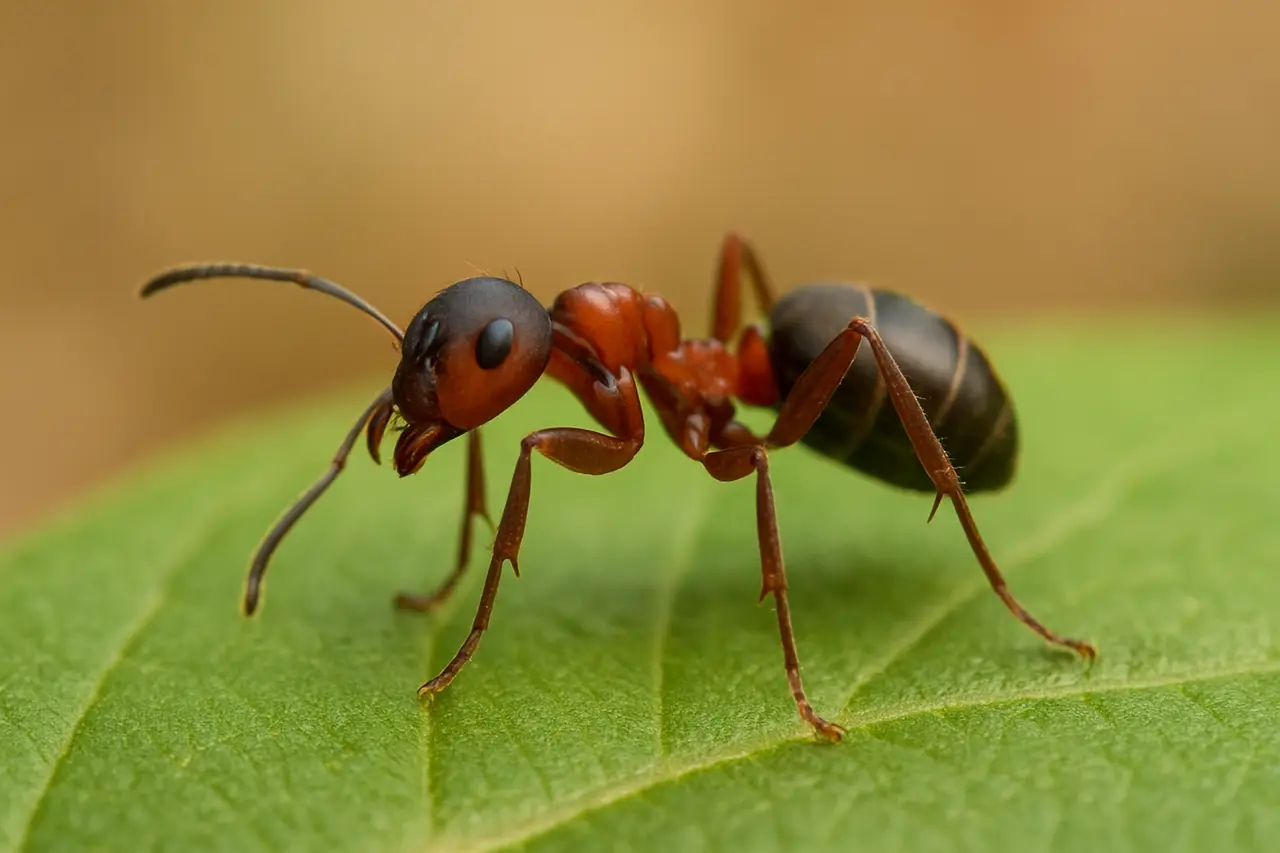
The short answer: An average ant weighs only about 1 to 5 milligrams (roughly 0.000035 to 0.00018 ounces), varying by species and caste.
Ant weight by type
Ant weight depends heavily on species and role in the colony. Here are rough figures.
| Type (example) | Typical weight |
|---|---|
| Small worker ant | About 1 to 2 mg |
| Average worker ant | About 2 to 5 mg |
| Large species worker (e.g. carpenter) | About 4 to 10 mg |
| Queen ant | Up to roughly tens of milligrams |
What affects ant weight
- Species. Ant species vary widely, from tiny to relatively large.
- Caste. Queens and soldiers are heavier than ordinary workers.
- Feeding. An ant carrying food or full of nectar weighs more.
- Age and stage. Newly emerged adults differ slightly from mature ones.
- Colony role. Specialized workers can differ in size within one species.
How ant weight compares
An ant at a few milligrams weighs roughly a thousandth of a paperclip, yet it can carry many times its own body weight.
Frequently asked questions
How much can an ant lift compared with its weight?
Many ants can carry objects 10 to 50 times their own body weight, an impressive feat for an insect weighing only a few milligrams.
Do queen ants weigh more than workers?
Yes. Queens have much larger abdomens for egg-laying and can weigh many times more than a worker ant.
How much does an ant colony weigh?
It depends on size, but a large colony of hundreds of thousands of ants can collectively weigh several kilograms.