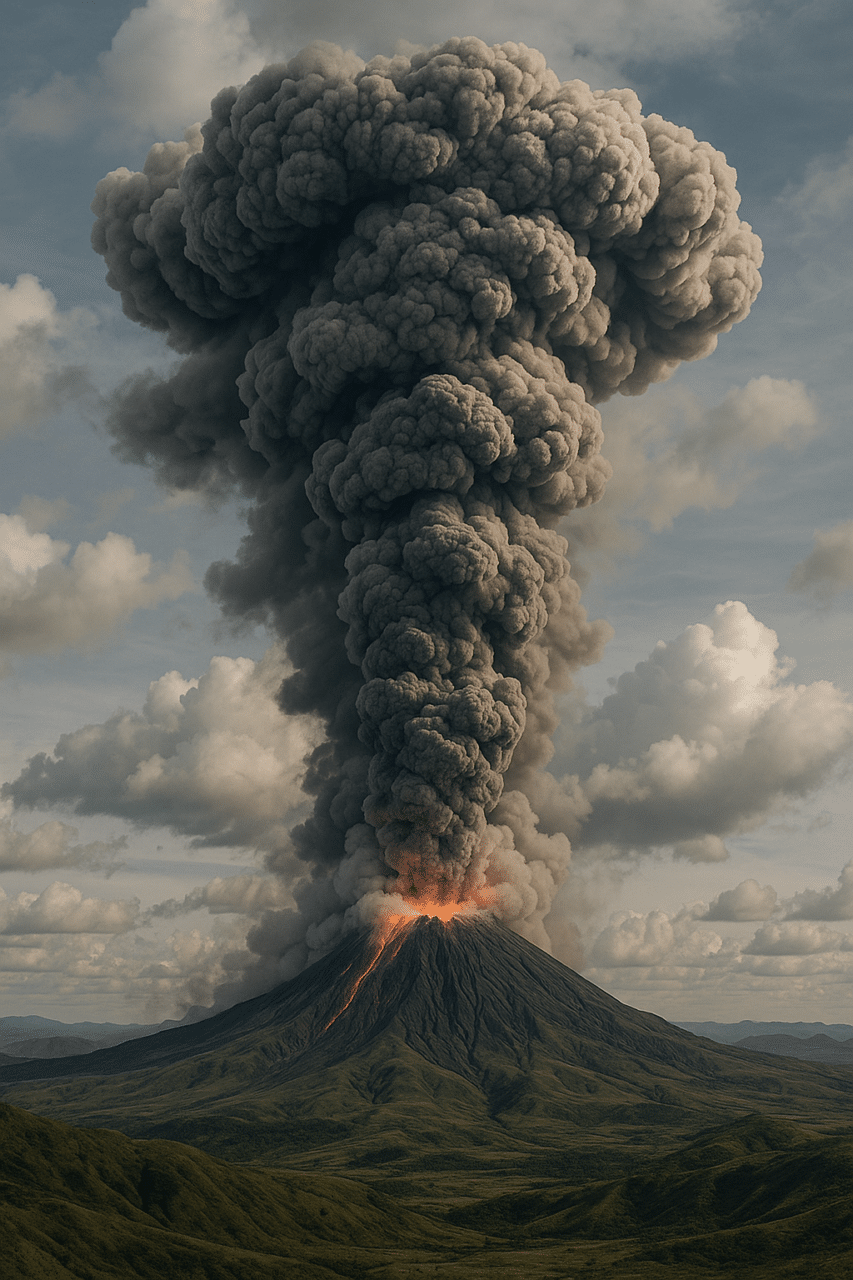
Interesting Fact: Did you know that the weight of a volcanic ash cloud can rival the mass of a small mountain? When Mount St. Helens erupted in 1980, it released approximately 540 million tons of ash into the atmosphere, enough to cover a city like New York in a blanket several inches thick.
The Answer: Weighing a volcanic ash cloud might seem as elusive as capturing the wind, yet scientists have developed methods to estimate its mass. The weight of a volcanic ash cloud varies significantly depending on the size of the eruption and the composition of the ash. On average, a cubic meter of volcanic ash can weigh between 500 to 700 kilograms. To put this into perspective, a large volcanic eruption can release millions of cubic meters of ash, weighing several hundred million tons in total.
About the History: The endeavor to understand the weight of volcanic ash clouds is akin to the ancient Korean tale of the magpie and the tiger, where the small bird outsmarts the formidable beast with wisdom and perseverance. In the same vein, scientists have long been fascinated by volcanoes and their formidable power. Knowing the weight of an ash cloud is crucial for several reasons. It helps in predicting the impact on air travel, agriculture, and human health. Historically, volcanic eruptions have taught us the importance of preparedness and respect for nature’s might. The quest to measure these clouds involves a harmonious blend of satellite technology, ground samples, and atmospheric models—an intricate dance of science seeking to understand the grand tapestry of our planet.
In Korean culture, there is a proverb that says, “Even the tallest mountain cannot block the sun.” This reminds us that, no matter how daunting the task, with patience and ingenuity, we can unveil the mysteries of the natural world. Understanding the weight of a volcanic ash cloud is a testament to human curiosity and resilience, a gentle reminder of our enduring connection to the earth.

Comments (0)
There are no comments here yet, you can be the first!