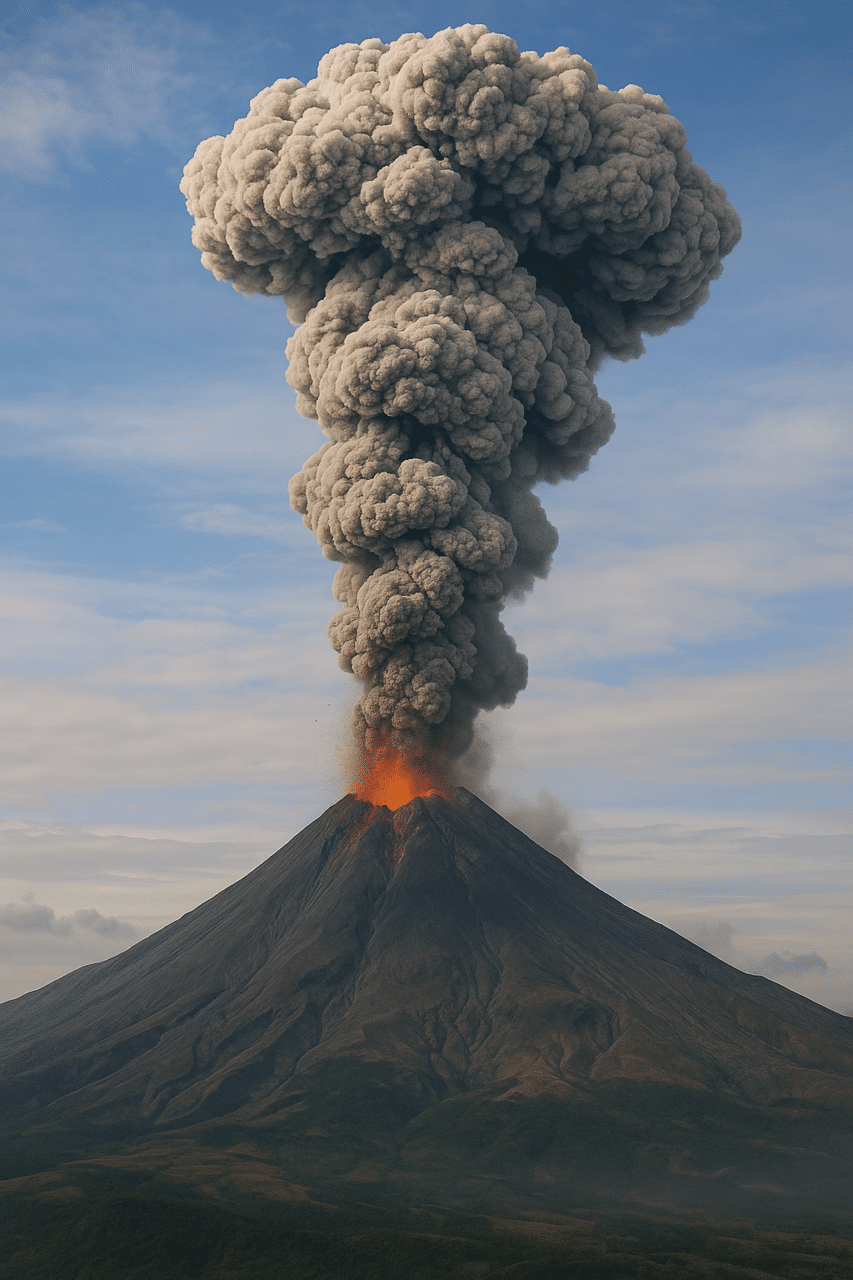
Ah, volcanic plumes – nature’s way of putting on a fireworks show that’s simultaneously awe-inspiring and slightly terrifying. Picture this: Mount St. Helens, May 18, 1980. The eruption sent a plume soaring 80,000 feet into the sky, a sight visible from 500 miles away. That’s like stacking 15,151 DeLoreans end to end, assuming you’ve got a mountain of them stashed away.
Now, onto the question: How much does a volcanic plume weigh? Well, it’s a bit like trying to weigh a cloud—except this cloud is angry, full of ash, gas, and pyroclastic debris. A significant volcanic plume can weigh millions of tons. For instance, the Mount St. Helens eruption ejected about a cubic kilometer of material, weighing approximately 1.4 billion tons. That’s a weighty subject, quite literally!
Volcanic plumes have been a topic of scientific curiosity since humans first realized that these towering columns of ash and gas could blot out the sun. Weighing them isn’t as straightforward as throwing them on a bathroom scale. Scientists use a combination of satellite data, ground-based observations, and mathematical modeling to estimate their weight. These efforts are crucial not just for academic curiosity but for understanding the impacts on air travel, climate, and, frankly, our ability to breathe.
Weighing volcanic plumes is a bit like trying to measure the weight of the world’s nostalgia for bell-bottom jeans and disco balls—intangible yet impactful. In the grand scheme of things, understanding the weight of a volcanic plume helps us prepare for its aftereffects. So, the next time you find yourself daydreaming about the swirling dance of ash and gas, remember: these plumes carry the weight of the world, quite literally, on their smokey shoulders.

Comments (0)
There are no comments here yet, you can be the first!