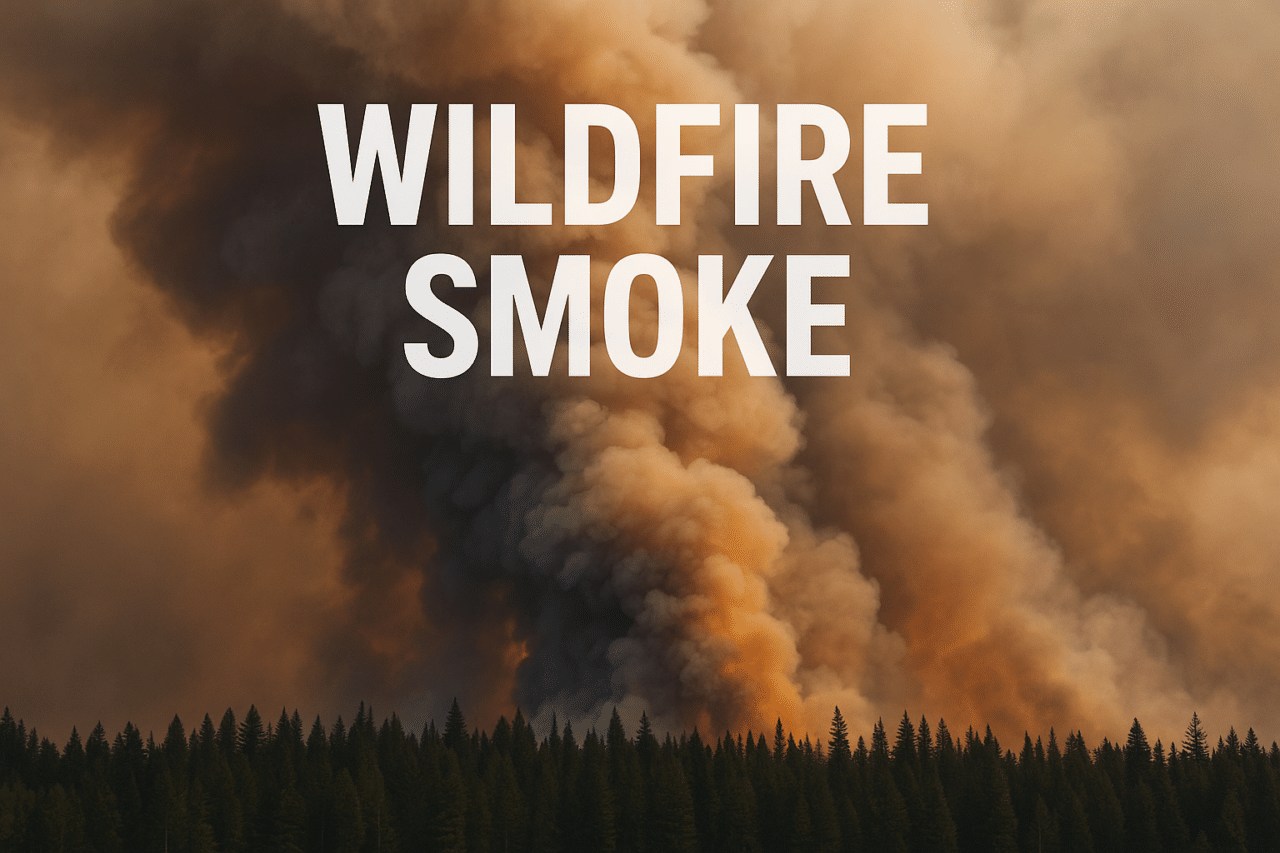
An Interesting Fact: Did you know that the smoke from a single wildfire can weigh as much as 7,000 elephants combined? That’s right—wildfire smoke, often seen as an ethereal, almost ghostly presence in the sky, actually has considerable mass, making it a heavyweight contender in the arena of atmospheric phenomena.
The Answer: Quantifying the weight of wildfire smoke is no easy task, but scientists estimate that for every ton of biomass burned, about 1,500 pounds of particulate matter and gases are released. This means that a large-scale wildfire can generate smoke weighing thousands of tons. While the smoke itself may seem insubstantial, its mass is significant enough to impact both air quality and climate patterns.
A Brief History and Importance: The history of studying wildfire smoke is as old as humanity’s relationship with fire itself. From the campfires of early humans to today’s sprawling wildfires, the challenge has always been the same: understanding and managing the smoke that results. Weighing wildfire smoke is not just an academic exercise—it’s crucial for public health officials who monitor air quality, for climate scientists who study its impact on global weather patterns, and for firefighters who use data to better predict and combat wildfires.
I recall a camping trip from my youth, where we gathered around the fire, mesmerized by the dancing flames. Little did we know, that smoke drifting skyward was part of a massive atmospheric ballet, its weight affecting everything from the air we breathed to the sunsets we admired. Understanding the weight of wildfire smoke is a bit like trying to weigh a cloud—elusive, yet essential. And while we may not measure it on a bathroom scale, the impact of its weight is felt in every breath and every breeze.

Comments (0)
There are no comments here yet, you can be the first!