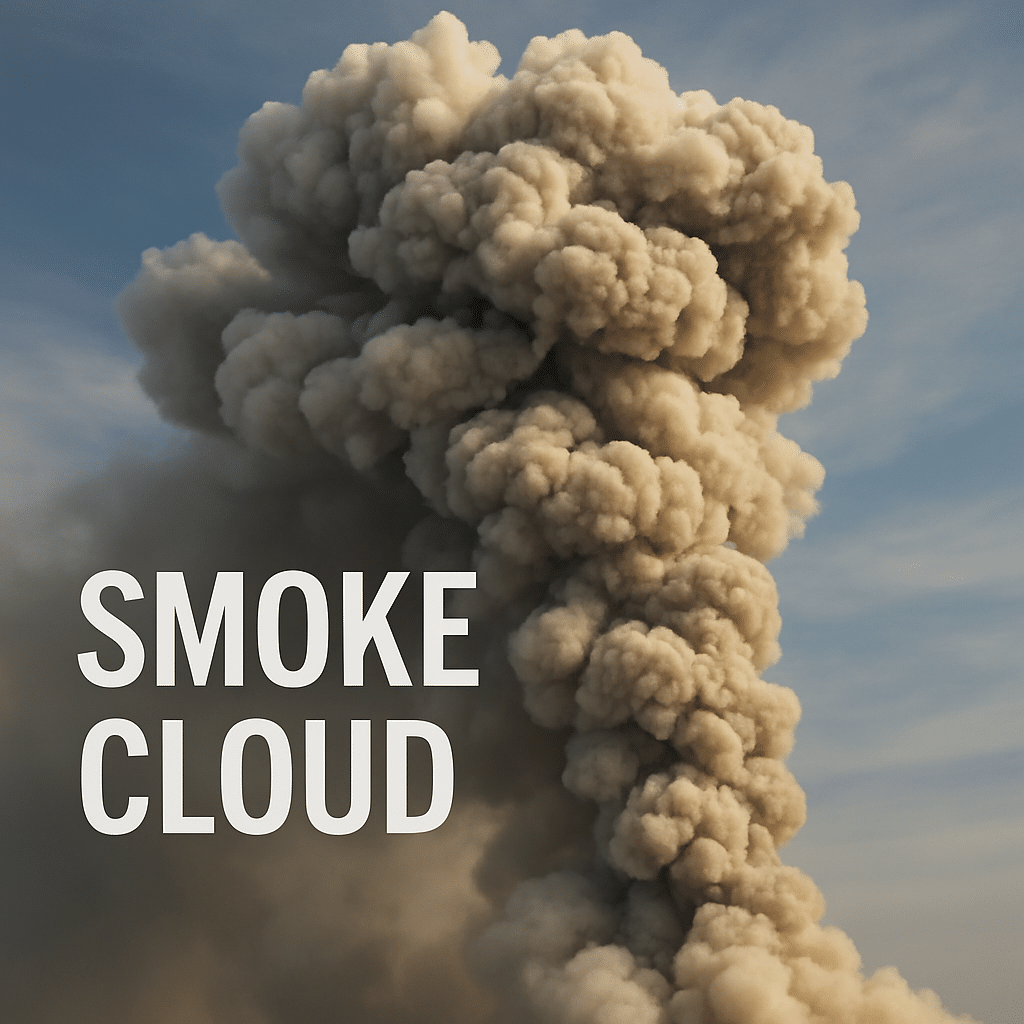
Ah, the enigmatic smoke cloud—ever elusive, yet omnipresent. Did you know that the weight of a smoke cloud can vary dramatically based on its composition and the conditions around it? In fact, a smoke cloud from a typical campfire can weigh around a few grams, while those resulting from industrial emissions or large-scale wildfires can amass to several tons. Just imagine a smoke cloud with the heft of that old stereo system you lugged around in the ’80s, complete with its cassette deck and oversized speakers.
Answering the question of how much a smoke cloud weighs is akin to solving a Rubik’s Cube blindfolded—possible, but not without its share of challenges. You see, smoke is essentially a mix of tiny particulates and gases suspended in the air. Measuring its weight requires capturing these particles and understanding their density, much like trying to measure the collective weight of those 45 RPM vinyl records from your basement.
Historically, the task of weighing smoke has been tackled by scientists using advanced technology, such as laser-based sensors and specialized air sampling equipment. The importance of knowing a smoke cloud’s weight extends beyond mere curiosity; it plays a crucial role in understanding air quality and the environmental impact of pollution. If we can measure the weight of smoke, we can better anticipate its effects on climate change and public health. And let’s face it, nobody wants to relive the smog-filled days of the ’70s, when clear skies were as rare as a mint-condition 8-track tape.
So, next time you see a smoke cloud drifting lazily across the sky, think of it not just as an ephemeral wisp but as a tangible entity with a weight all its own—an invisible heavyweight contender in the arena of atmospheric phenomena. As we continue to unravel the mysteries of our environment, perhaps one day we’ll be able to weigh smoke clouds as effortlessly as we do those cherished memories of yesteryear.

Comments (0)
There are no comments here yet, you can be the first!